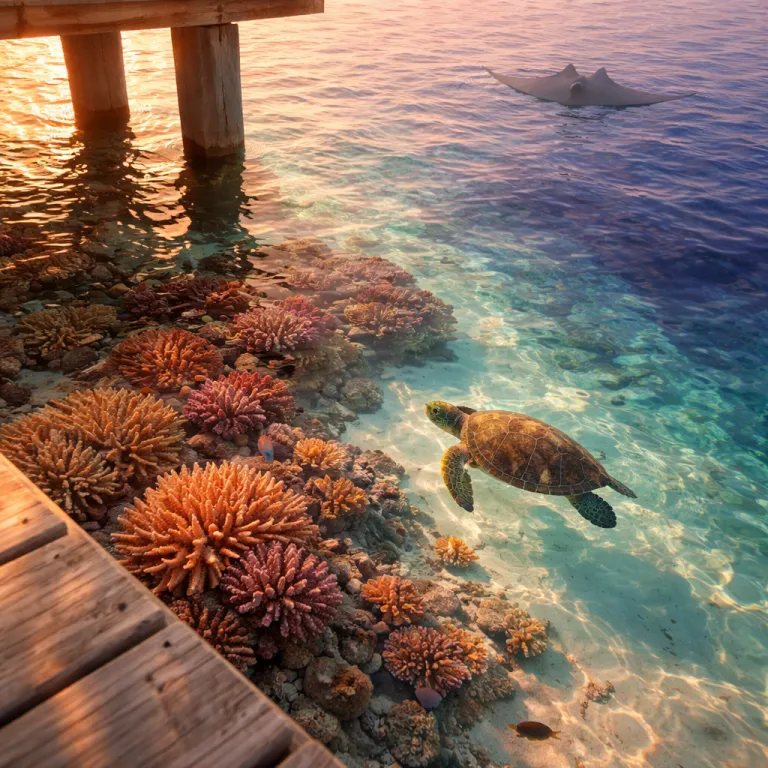
How marine life under overwater villas really differs by destination
Choosing an overwater villa is really choosing a marine neighborhood. The main question behind any search for marine life under overwater villa by destination is simple yet overlooked ; what actually lives beneath your deck, and how close is it to your ladder. From the Maldives to the Caribbean, the mix of coral, sand, depth and current shapes whether your stay is about reef sharks at dawn or just a tranquil turquoise view.
Across the world, overwater bungalows and overwater villas sit in very different ecosystems. Some resorts perch their villas on the edge of a living house reef with direct access to deep water, while others float them above a calm lagoon of sand and seagrass with only small reef fish passing by. Understanding these contrasts lets you match the right resort hotel or luxury resort to your expectations, whether you want constant snorkeling or simply the sound of the sea.
Data from regional tourism boards shows how destination choice changes what you see. In the Maldives, around 85 % of overwater villas offer direct reef access, and guests regularly report more than 50 marine species on a single snorkeling session. In French Polynesia and the Caribbean, overwater bungalow clusters are more often set above sandy lagoon floors, where the marine life is gentler and the focus shifts from adrenaline to slow observation.
Maldives: house reef drama beneath your water villa
The Maldives remains the benchmark for serious marine life under overwater villa by destination. Here, many water villas sit just a few fin kicks from a drop off where the atoll’s house reef falls into blue water, and that geography explains the constant traffic of reef sharks, rays and turtles. If you want to climb down your ladder at sunrise and meet a cruising blacktip reef shark, this is where the odds are highest.
On a strong house reef in the Maldives, you can expect green and hawksbill turtles grazing on coral, batfish and parrotfish schooling under your glass floor, and moray eels tucked into overhangs only metres from your villa deck. Stingrays and eagle rays glide past in the late afternoon, while nurse sharks, lionfish, octopus and bioluminescent plankton turn night snorkeling into a different world. It is common to see more than 50 species in a single session, which makes the Maldives uniquely intense compared with other islands.
When you compare Maldivian resorts, ask specific questions about marine life and layout. Check how far the overwater bungalows are from the reef crest, whether there is safe direct access from your private deck, and how strong the currents run at different tides. For solo travelers or guests seeking a family friendly option, look for a luxury resort such as Sun Siyam properties where the inner lagoon stays shallow for beginners, while the outer house reef remains close enough for confident swimmers and guided snorkeling from the resort spa or marine biologist team.
Families often ask whether it is safe to snorkel directly from a Maldivian overwater villa. The verified guidance is clear ; "Yes, but always check local conditions and follow resort guidelines." That advice matters even more on islands where the south coast faces open sea swells, because the same deep water that brings manta rays and reef sharks also brings stronger currents. Choose resorts that provide quality gear, clear briefings and easy exit points along the villa jetties.
For travelers comparing overwater villas for families, focus on how the lagoon shelves away from the beach and how the villa cluster is oriented to the prevailing wind. Some Maldivian resort hotels place their water villas in very shallow water, which suits nervous swimmers but limits marine life to small reef fish and juvenile rays. Others angle the jetty toward the channel, where blacktip reef sharks and turtles patrol, giving confident snorkelers a more dramatic experience straight from their private villa deck.
If you are curious about what the glass floor really shows you during a Maldivian night above the reef, read the in depth guide on how a glass floor changes your view of the house reef. It explains why some glass floor panels frame only sand and seagrass, while others sit above coral heads where parrotfish graze and bioluminescent plankton flicker after dark. Use that knowledge when choosing between different villas within the same resort.
Bora Bora, Tahiti and Moorea: lagoon light and French Polynesia’s gentler reefs
French Polynesia offers a very different version of marine life under overwater villa by destination. Around Bora Bora, most overwater bungalows sit in a shallow turquoise lagoon with a sandy bottom, where the drama is not a vertical reef wall but the clarity of the water and the silhouettes of rays and small sharks. You trade the Maldivian drop off for a cinematic view of Mount Otemanu and a calmer, more meditative underwater scene.
Under many Bora Bora overwater bungalows, you will see small reef fish picking over coral fragments, with blacktip reef sharks and stingrays cruising the channels between the villas. The marine life here is less dense than on a Maldivian house reef, yet the lagoon’s soft light and pale sand make every movement visible from your deck or glass floor. Statistics from the French Polynesia Marine Research Centre suggest around 30 species per typical snorkeling session, which suits travelers who prefer slow exploration to constant action.
Tahiti and Moorea add another layer to French Polynesia’s appeal. Their lagoons are deeper, with coral gardens scattered between sandy patches, and eagle rays often glide through the channels near overwater villas. When you choose a resort hotel on these islands, ask whether the overwater villas sit above coral gardens or mostly above sand, because that single detail changes how often you will snorkel from your private ladder versus booking a boat trip.
Many French Polynesian resorts market their overwater villas as family friendly, but the reality depends on depth and current. If you are traveling with children, look for a luxury resort where the inner lagoon remains waist deep for at least 30 to 40 metres from the beach, and where the overwater bungalow row starts in relatively shallow water. That layout lets confident teens snorkel safely from the villa while younger guests stay closer to shore with easy supervision.
In both Bora Bora and Moorea, the best marine life often sits just beyond the main villa jetty. Choose resorts that offer guided snorkeling directly from the overwater bungalows, rather than only from distant outer reefs. When you read reviews, pay attention to mentions of small stingrays, spotted eagle rays and schools of small reef fish under the walkways, because those details signal a healthier lagoon ecosystem around your villa.
For solo explorers who want a balance between lagoon tranquility and reef access, French Polynesia can be ideal. You can spend mornings snorkeling from your private deck among rays and small sharks, then join a guided trip to outer coral gardens for more varied marine life. The key is to treat each island and each resort as a separate micro destination, because the distance from your overwater villa to the nearest coral head can vary dramatically even within the same archipelago.
Caribbean overwater: views, smaller reefs and Panama’s Bocas del Toro
The Caribbean has entered the overwater conversation later, and that timing shapes the marine life under overwater villa by destination in this region. Many Caribbean overwater bungalows are built in sheltered bays or lagoons where the focus is on calm water and sunset views rather than intense reef life. You still get tropical fish and occasional rays, but not the same density of sharks and turtles seen in the Maldives or French Polynesia.
Under Caribbean overwater villas, you will typically find small reef fish weaving through seagrass beds and around scattered coral heads. Tourism data suggests that around 60 % of Caribbean overwater bungalows sit near coral gardens, with an average of 25 species seen per snorkeling session, which is lower than in the Indo Pacific but still rewarding for casual swimmers. Small stingrays and spotted eagle rays occasionally pass beneath the villas, especially in quieter corners of the lagoon.
Panama’s Bocas del Toro archipelago has become a reference point for this style of overwater stay. Around Bocas del Toro, many resorts place their bungalows above seagrass meadows where starfish, juvenile fish and occasional rays feed in very shallow water. The experience is more about paddling a kayak from your private villa to nearby mangroves than about dropping straight onto a steep reef wall.
On the south coast of some Caribbean islands, the sea can be slightly rougher, which affects both visibility and marine life. When you consider a resort hotel in Jamaica, Saint Lucia or Bocas del Toro, ask whether the overwater villas face open water or sit inside a protected lagoon. For a calmer, more family friendly stay, choose a luxury resort where the villa jetty is tucked behind a natural breakwater or reef crest.
Caribbean overwater resorts often compensate for lighter marine life with strong wellness and resort spa programs. That can be a smart trade if you value a panoramic sea view from your villa as much as daily snorkeling. Just be honest with yourself ; if your priority is constant encounters with reef sharks and turtles, the Caribbean will feel gentle compared with the Maldives or French Polynesia.
For solo travelers, the Caribbean’s softer underwater profile can be reassuring. You can swim from your private deck over clear water with small fish and rays, without the intensity of a Maldivian channel. The key is to calibrate expectations and treat Caribbean overwater villas as a hybrid between a classic beach hotel and a reef focused water villa stay.
Emerging overwater destinations: Lakshadweep, Vietnam and beyond
New overwater destinations are reshaping the map of marine life under overwater villa by destination. India’s Lakshadweep islands, for example, are beginning to open carefully managed overwater villas near turtle nesting beaches and marine protected zones. Here, the promise is not just a private villa above clear water, but a front row seat to conservation led reef recovery.
In Lakshadweep, early projects focus on keeping overwater bungalows close to shore and away from the most sensitive coral heads. Guests can expect to see turtles, small reef fish and rays from their decks, with guided snorkeling trips leading to healthier outer reefs. If you are considering these islands, ask specifically about how the resort manages lighting, waste and anchoring around the villas, because those details directly affect the surrounding marine life.
Vietnam’s Phú Quốc is another emerging player, with lagoon based water villas that offer a different Indo Pacific species mix. At properties such as the overwater resort inside Luxnam Phú Quốc’s 109 lagoon villas, the experience is about calm, jade coloured water with scattered coral and seagrass rather than dramatic drop offs. You can read more in the dedicated feature on Vietnam’s first overwater resort and its lagoon villas, which explains how the design balances privacy with reef friendly construction.
Across these emerging destinations, the smartest luxury resort operators are building smaller clusters of overwater villas and keeping them close to the main island. That approach reduces pressure on the reef and shortens the swim from beach to villa, which suits both solo explorers and family friendly itineraries. It also means that the most interesting marine life may sit slightly away from your deck, reached by a short guided snorkeling trip rather than a direct ladder descent.
When you evaluate new overwater projects in places like Lakshadweep or Vietnam, look beyond the marketing images of turquoise water. Ask whether the resort hotel employs a resident marine biologist, how often they run marine life education programs, and whether night snorkeling is offered safely. Innovation in these regions often centres on low impact lighting and reef safe infrastructure rather than on dramatic glass floor designs.
For travelers who have already stayed in the Maldives or French Polynesia, these emerging islands offer a different kind of narrative. You may see fewer sharks from your villa, but you gain the context of conservation projects, turtle monitoring and community led reef restoration. That trade can be compelling if you value both marine life and the long term health of the sea beneath your overwater villa.
How to read a resort map: house reef, depth and direct access
Once you understand the regional differences, the next step in choosing marine life under overwater villa by destination is learning to decode resort maps. Every overwater resort publishes a layout showing villa jetties, the beach and the house reef, and that simple sketch reveals how much you will actually snorkel from your deck. The closer the villas sit to the reef edge, the more likely you are to see serious marine life without booking a boat.
Start by checking where the house reef is marked relative to the overwater villas. If the map shows coral symbols right under or beside the villa line, you can expect regular visits from parrotfish, turtles and reef sharks, especially in the Maldives. If the reef sits far beyond the last villa, your daily swims from the deck will be over sand and seagrass, with most of the action reserved for guided trips.
Depth matters as much as distance. In very shallow lagoons, you may have only one to two metres of water under your glass floor, which is ideal for watching small reef fish but limiting for snorkeling at low tide. Deeper channels of three to five metres bring more species and better vertical space for rays and sharks, yet they also demand stronger swimming skills and closer attention to currents.
Direct access from your private deck is another key filter. Some resorts fence off the water around overwater bungalows for safety, forcing guests to enter the sea from a central staircase on the jetty, which dilutes the sense of living above the lagoon. Others provide sturdy ladders, handrails and even small freshwater showers at each villa, making it effortless to slip into the water several times a day.
For family friendly stays, look for a hybrid layout. The best luxury resorts place their first row of water villas in shallower water near the beach, with deeper villas further along the jetty for confident swimmers. That way, solo travelers and couples can book the outer villas for more intense marine life, while families choose inner villas with gentler conditions and easier supervision from the deck.
Finally, pay attention to orientation. Villas facing the open sea or a channel will see more pelagic visitors, from eagle rays to reef sharks, but they may also feel breezier and more exposed. Villas tucked inside a lagoon behind a sandbar will be calmer and quieter, with marine life focused on small fish and rays rather than larger predators.
Questions to ask before you book: from glass floors to marine biologists
By the time you narrow your shortlist, the difference between a good and exceptional stay often comes down to details. To get the marine life under overwater villa by destination that you really want, you need to ask sharper questions than the usual "Is snorkeling good ?". The most revealing answers are about distance, depth, safety and science.
Start with the house reef and access. Ask the resort ; how many metres is it from my overwater villa to the nearest coral head, and what is the maximum depth I can reach without a boat. Clarify whether you can enter the water directly from your private deck at all tides, or only at certain times, and whether the resort provides quality snorkeling gear in multiple sizes.
Glass floors deserve a reality check. They can be magical when placed above coral heads in the Maldives or French Polynesia, where parrotfish and rays pass regularly, but underwhelming when set above plain sand in a Caribbean lagoon. Use property maps and guest photos to see whether the glass floor panels sit over real marine life or simply over shallow water with occasional small fish.
Night snorkeling is another differentiator. Resorts in the Maldives often organise guided night sessions where guests see nurse sharks, lionfish, octopus and bioluminescent plankton near the villas, using underwater flashlights and strict safety protocols. If this appeals, confirm how often these excursions run, what group sizes are, and whether a marine biologist or trained guide always leads the swim.
Safety questions are non negotiable, especially for solo travelers and families. Always ask about currents around the overwater bungalows, lifeguard coverage, and whether life vests and surface buoys are available for guests who want extra reassurance. Follow the core guidelines ; always snorkel with a buddy, avoid touching marine life, use reef safe sunscreen and stay aware of local tides.
Finally, probe the resort’s environmental credentials. Ask whether feeding fish from the villa is prohibited, how waste water is treated under the overwater villas, and whether the resort hotel supports local reef monitoring or turtle conservation. Choosing properties that invest in marine life education programs and responsible design helps ensure that the sea beneath your villa remains vibrant for future trips.
Key figures on marine life beneath overwater villas
- In the Maldives, an estimated 85 % of overwater villas have direct access to a nearby reef, which explains why guests often report intense marine encounters straight from their decks (Maldives Tourism Board).
- Snorkelers in the Maldives typically observe around 50 marine species in a single session near a strong house reef, significantly higher than most other overwater destinations (Maldives Marine Research Centre).
- Approximately 70 % of overwater bungalows in French Polynesia sit close to coral gardens, yet the average species count per snorkel is around 30, reflecting the calmer, lagoon based ecosystem (French Polynesia Tourism Authority and Marine Research Centre).
- In the Caribbean, about 60 % of overwater bungalows are near coral gardens, with an average of 25 species seen per snorkeling outing, which positions the region as gentler but still rewarding for casual swimmers (Caribbean Tourism Organization and Marine Research Centre).
- Across major overwater destinations, demand for night snorkeling and marine life education programs has risen steadily, pushing more luxury resorts to hire resident marine biologists and redesign villa clusters to reduce reef impact.
FAQ about marine life under overwater villas
Is it safe to snorkel directly from my overwater villa ?
Snorkeling from an overwater villa can be safe when you respect local conditions and resort guidelines. Always check current strength, entry and exit points, and whether lifeguards or safety equipment are available. Resorts in the Maldives, French Polynesia and the Caribbean typically brief guests on safe zones around the villas.
What marine life can I expect to see under my villa ?
The species you see depend heavily on destination and reef proximity. In the Maldives, guests often encounter reef sharks, turtles, rays and dense schools of reef fish near the house reef, while French Polynesia’s lagoons favour rays, small sharks and colourful fish over sand. Caribbean overwater villas usually offer smaller reef fish, seagrass life and occasional rays rather than large predators.
Do I need special equipment for night snorkeling from a resort ?
Night snorkeling requires an underwater flashlight, a well fitting mask, snorkel and fins, plus high visibility gear such as a surface marker or glow stick. Many luxury resorts provide this equipment and insist that guests join guided groups led by marine biologists or trained staff. Always follow the resort’s safety protocols and stay close to the guide’s light beam.
Are there environmental concerns with overwater villas and marine life ?
Overwater construction can damage coral if not carefully planned, so responsible resorts now use pile systems and avoid sensitive reef zones. Look for properties that treat waste water properly, limit artificial lighting over the sea and support local conservation projects. Choosing such resorts helps protect the marine life that makes these stays special.
Can I feed the fish from my overwater villa deck ?
Feeding fish from your villa is strongly discouraged because it alters natural behaviour and can harm the ecosystem. Many resorts explicitly ban fish feeding to protect reef health and maintain balanced marine life. Instead, enjoy observing fish and rays in their natural patterns while keeping a respectful distance.
References
- Maldives Marine Research Centre
- French Polynesia Marine Research Centre
- Caribbean Marine Research Centre