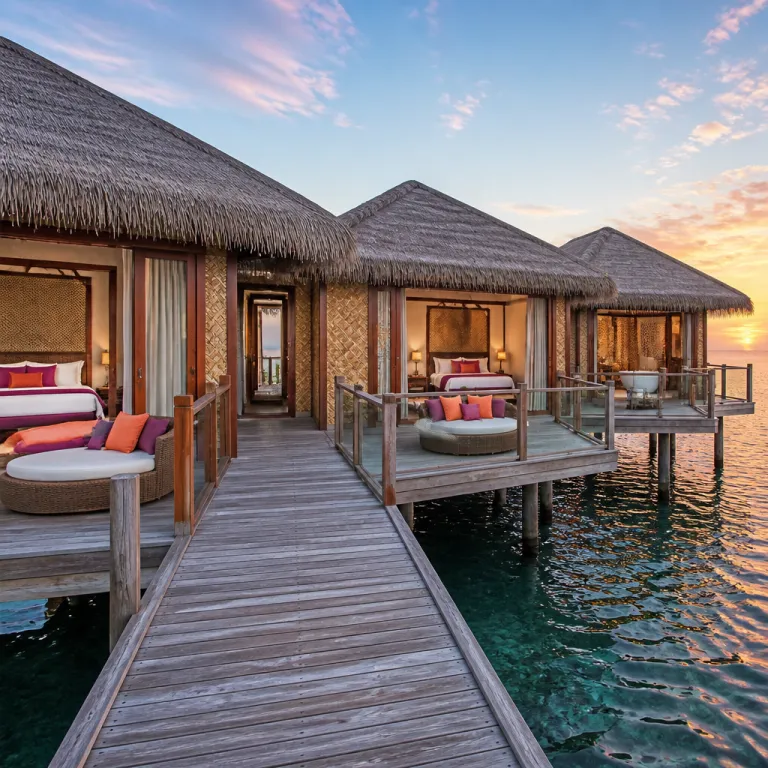
Why multigenerational overwater villa stays rise and how space really works
Families are no longer asking whether an overwater villa can host three generations, they are asking how the layout will shape the trip. The multigenerational luxury travel market has grown fast, and the dominant pattern is now three generations, ten to sixteen guests, staying ten to fourteen nights and booking six to eight months ahead, which means the best multi bedroom configurations are claimed early. When you plan a multigenerational overwater villa stay, the real question becomes how grandparents, parents and children can share water focused living spaces without sacrificing privacy or safety.
On a private island in the Maldives or French Polynesia, the difference between a standard overwater bungalow and a purpose built multigenerational overwater villa is usually the floor plan, not just the size. A classic overwater bungalow or even many water villas were designed for couples, with one bedroom, one bathroom and a single deck, while multi generational families need at least a two bedroom or three bedroom layout with separate wings and sound separation. When you compare villas and bungalows across different resorts, focus less on headline square metres and more on how the bedrooms connect to shared decks, pools and indoor living spaces.
High end island resort brands in the Maldives, Bora Bora and across the South Pacific now treat multi generational design as a core brief, not a niche request. At these villa resorts, architects carve out quiet corners for grandparents, kid friendly zones near the beach or lagoon, and central pavilions where everyone meets for meals or games. The result is that the best overwater villas for families feel like floating homes, with overwater bungalows and beach villas working together as one flexible, private compound.
Two bedroom overwater villas versus adjacent villas: what really works for three generations
When you compare a two bedroom overwater villa to booking two adjacent villas, you are really weighing intimacy against independence. A single multi bedroom overwater villa keeps everyone under one roof, which simplifies bedtime for children, shared breakfasts on the deck and late night conversations when the lagoon is quiet. Two separate overwater bungalows or water villas on the same boardwalk can give grandparents more privacy, but they often dilute that easy, all day togetherness that many families want from a rare trip.
In the Maldives, a two bedroom overwater villa with a private pool and shared deck can cost less than two separate one bedroom villas once you factor in taxes, transfers and meal plans. The same pattern appears in French Polynesia, where some Bora Bora villa resorts price their three bedroom overwater villas aggressively to attract multi generational bookings outside peak seasons. Always ask the resort or your advisor to compare the total cost of one multi bedroom villa versus multiple bungalows, including extras like butler service, in villa dining fees and kids club access.
Layout matters as much as price. In a well designed two bedroom overwater bungalow, each bedroom has its own bathroom and direct access to the deck, while a central living room or dining area anchors family time and keeps noise away from sleeping grandparents. By contrast, two separate bungalows at an island resort may sit several doors apart along the boardwalk, which can feel unsafe at night with younger children moving between villas and can complicate supervision when everyone is in the water.
For families considering French Polynesia, Moorea’s refined lagoon properties offer a useful benchmark for how compact islands handle multigenerational space. Some Moorea water bungalows pair overwater bedrooms with adjacent beach pavilions, creating hybrid compounds that work well for older relatives who prefer firmer ground. To understand how this plays out in practice, look at a detailed lagoon focused guide such as the one on refined Moorea water bungalows in French Polynesia, then compare those layouts with larger resort Maldives options.
Why shared decks, pools and living spaces matter more than an extra bedroom
For a multigenerational overwater villa stay, the most valuable square metres are usually outside the bedrooms. A broad deck with multiple seating zones, a shaded dining table and direct water access becomes the real living room, where families drift in and out between swims, naps and snacks. When that deck wraps around a private pool or a shallow lagoon entry, it anchors the day in a way no extra bedroom ever can.
Look closely at how the deck connects to indoor living spaces in any overwater bungalow or villa you consider. In the best overwater villas, sliding glass walls open from a central lounge onto the terrace, so grandparents can sit in the shade while watching children in the water, and teenagers can move between the glass floor viewing panels inside and the ladder into the reef outside. This fluid connection between interior and exterior is what separates true overwater bungalows designed for families from standard hotel style water villas that simply perch a room above the lagoon.
Shared amenities also change how you use the resort. A multi bedroom overwater villa with a private pool, outdoor shower and generous deck means you are less dependent on the main beach or crowded pools, which can be a relief in busy seasons. When you add in a responsive in villa dining team and, at some hotels resorts, a dedicated butler who can coordinate kids clubs schedules, spa appointments and boat transfers, the villa itself becomes a private island style hub for the entire family.
On smaller private islands in the South Pacific, where space is tight, some villa resorts solve the multigenerational puzzle by pairing one overwater villa with a neighbouring beach bungalow that shares a garden and plunge pool. This hybrid layout keeps younger children closer to the sand while still giving parents and grandparents that overwater experience with a glass floor and direct ladder into the lagoon. If you are planning a longer stay or even a serene pre baby escape before expanding the family, it is worth studying how these shared spaces function in practice through resources such as the curated guide to all inclusive overwater packages in Moorea.
Safety with young children on overwater decks: what to check before you book
Safety is the quiet deal breaker for any multigenerational overwater villa holiday with young children. Before you commit to a resort Maldives stay or a French Polynesia escape, ask for recent photos and, ideally, short videos of the deck railings, gates and ladders of the specific villa category you are considering. You want to see solid, high railings, minimal horizontal bars that can be climbed and, where possible, lockable gates between the main terrace and the water.
Lagoon depth under and around the villa matters as much as the railings. Some island resorts position their overwater bungalows above deep channels with strong currents, which can be thrilling for adults but stressful for parents of toddlers, while others sit in shallow, sandy lagoons where the water stays at waist height for many metres. Ask the resort to specify average water depth at low and high tide around your chosen villa, and whether there are any coral heads or rocks near the ladder that could be hazardous for children or older relatives.
Inside the villa, check how the bedrooms and living spaces relate to the deck. In a well planned multi bedroom overwater villa, you can close off the main terrace from the interior with lockable sliding doors, so children cannot slip outside at dawn while adults are still asleep. Some of the best family focused villa resorts also provide removable child safety locks, pool alarms for private pools and non slip surfaces on steps and ladders, which are worth requesting in advance.
Resorts that genuinely understand multi generational needs will talk openly about these details rather than brushing off your questions. They will explain whether the kids club or kids clubs team can escort children back to the villa after activities, how lifeguard coverage works around the main beach and pools, and whether any overwater villas are closer to staffed areas. When you hear specific, practical answers about rail heights, lagoon depth and supervision policies, you can feel more confident that the overwater setting will be magical rather than nerve wracking.
Booking lead times and the reality of high demand for multi bedroom overwater villas
Multigenerational overwater villa stays sit at the intersection of two high demand trends, extended family travel and limited inventory of large overwater units. Data from luxury villa specialists shows that three generation groups of ten to sixteen guests now book ten to fourteen night stays six to eight months ahead, especially for peak seasons in the Maldives and the South Pacific. That pattern means the best three bedroom and multi bedroom overwater villas are often gone long before casual planners even start browsing.
If you want a specific configuration, such as a three bedroom overwater bungalow with a private pool on a quieter side of the island, treat it like securing a coveted restaurant table rather than a standard hotel room. Start by shortlisting three to five island resort options across regions like Bora Bora, Moorea and resort Maldives atolls, then ask each for detailed floor plans, exact locations on the map and any minimum stay rules for multi generational bookings. Once you have that information, move quickly, because villa resorts will prioritise longer stays and repeat families when allocating their limited inventory.
Booking early also gives you leverage to fine tune the stay. With six to eight months lead time, many hotels resorts can guarantee adjacent bungalows for grandparents who prefer land based rooms, arrange connecting boardwalk access between overwater villas and beach villas, or pre book prime kids club time slots that align with spa or diving plans for the adults. You can also lock in better transfer times, which matters when you are moving three generations through seaplane schedules or inter island ferries.
For families considering a babymoon now and a larger multigenerational trip later, it can be smart to test a resort with a shorter stay in a smaller villa first. A curated planning resource such as the guide to the best babymoon places for serene overwater villa escapes can help you identify properties that already think in terms of life stages and evolving family needs. Those same resorts are often the ones that handle complex, multi generational overwater villa logistics with the most finesse.
Key questions to ask about layouts, service and kids clubs for three generations
Once you have narrowed your list of overwater villas, the questions you ask will determine how well the stay works for three generations. Start with the physical layout, asking whether the villa is a single structure or a cluster of pavilions connected by covered walkways, and whether any bedrooms open directly onto the deck without an internal corridor. Clarify if the multi bedroom villa has one central entrance or separate doors for each bedroom, which affects how easily you can monitor children and how much independence grandparents enjoy.
Service structure is the next layer. Ask whether your villa comes with a dedicated butler or shared butler coverage, and whether that person is available across all seasons or only in peak periods, because consistency matters when you are coordinating in villa dining for ten or more people. Confirm if group breakfasts and dinners can be served on your deck or in indoor living spaces, and whether the kitchen can handle different dietary needs across the family without requiring you to dine every night in the main restaurants.
For families with younger children, kids club details can make or break the trip. Ask whether the resort offers one central kids club or multiple kids clubs for different age groups, what the operating hours are and whether staff can escort children back to the villa or only release them to parents at the club. Clarify if activities extend onto the beach or into the lagoon, and whether any overwater bungalows or water villas sit close enough to the club that older children can walk there safely along the boardwalk.
Finally, probe how flexible the resort is with mixing overwater and beach inventory for multi generational stays. Some island resorts will happily pair a three bedroom overwater villa with a nearby two bedroom beach bungalow to create a five bedroom compound, while others keep overwater villas and land based villas in separate zones. The more precisely you understand these policies before you book, the easier it becomes to match the resort’s physical reality with your family’s rhythms and expectations.
Regional nuances: Maldives, Bora Bora and the wider South Pacific for multigenerational overwater stays
Not all overwater destinations approach multigenerational design in the same way. The Maldives tends to offer the largest inventory of multi bedroom overwater villas, often with dramatic private pools, long decks and generous glass floor panels, because many resort Maldives properties were built from the outset as villa only islands. Bora Bora and wider French Polynesia, by contrast, evolved from classic overwater bungalows aimed at couples, then gradually added larger villas as multi generational demand grew.
On a private island in the Maldives, you are more likely to find three bedroom or even four bedroom overwater villas with separate staff entrances, full indoor dining rooms and expansive living spaces that feel like contemporary beach houses on stilts. These villa resorts often sit on private islands or atolls where every structure is a villa, which makes it easier to cluster multiple units for extended families and to offer consistent butler coverage across the stay. For families who want a self contained, resort based experience with strong kids club programming, the Maldives remains one of the best choices.
French Polynesia and the broader South Pacific offer a different charm. Here, many island resorts blend overwater bungalows with beach villas under the same brand, so a multigenerational overwater villa stay might involve grandparents in a beach bungalow, parents in a two bedroom overwater villa and teenagers in a nearby overwater bungalow of their own. The trade off is that true three bedroom overwater villas are rarer, but the gain is a stronger sense of place, with views of volcanic peaks, local culture and more varied excursions beyond the resort.
Whichever region you choose, treat the multigenerational overwater villa as a tool rather than a trophy. The goal is not to secure the most dramatic glass floor or the longest ladder into the reef, but to find a layout where three generations can move easily between bedrooms, decks, beach and shared living spaces without friction. When the villa, the island and the resort’s service model all align with your family’s rhythms, the overwater setting becomes more than a backdrop, it becomes the quiet stage on which your family story unfolds.
Key figures shaping multigenerational overwater villa travel
- The global multigenerational luxury travel market was valued at US$96.4 billion and is projected to reach US$212.3 billion by 2034, showing how quickly extended family trips are reshaping villa design and inventory (The Action Elite, market analysis on multigenerational luxury villas).
- Booking data from high end villa agencies shows that the dominant pattern for multigenerational stays is three generations, ten to sixteen guests, staying ten to fourteen nights, which pushes demand toward larger multi bedroom overwater villas rather than standard bungalows (Haute Retreats booking insights for luxury Mediterranean villas, applied by analogy to island resorts).
- Those same datasets indicate that families now lock in these larger villas six to eight months ahead, especially for peak seasons, which explains why the best three bedroom overwater villas in the Maldives and French Polynesia often appear sold out long before departure dates.
- Industry reports on family travel note a clear preference for separate wings within villas, so children and grandparents each have their own space, a trend that has encouraged resorts to design overwater villas with distinct bedroom zones around central living spaces rather than linear hotel style layouts.
- Resort level data from leading island brands suggests that multi generational bookings generate higher ancillary spend on in villa dining, spa and private excursions, which in turn incentivises hotels resorts to invest in larger decks, private pools and more flexible living spaces in their flagship overwater villas.
FAQ about multigenerational overwater villa stays
Is an overwater villa safe for young children in a multigenerational group ?
An overwater villa can be safe for young children if you choose the right layout and ask detailed questions before booking. Look for high, solid railings, lockable gates between the deck and the water, and the ability to lock sliding doors from the inside so children cannot access the terrace unsupervised. Shallow lagoon depth, non slip surfaces and clear lifeguard or kids club policies at the resort further reduce risk for multi generational families.
Should we book one multi bedroom overwater villa or several smaller bungalows ?
One multi bedroom overwater villa usually works better for shared family time, because everyone gathers on the same deck and in the same living spaces. Several smaller overwater bungalows or water villas can give grandparents more privacy, but they complicate supervision of children moving along the boardwalk and dilute the sense of togetherness. Ask the resort to price both options with all taxes and extras, then weigh cost against how much daily connection your family wants.
How far in advance should we book a three bedroom overwater villa ?
For peak seasons in the Maldives, Bora Bora and the wider South Pacific, plan to book a three bedroom or larger overwater villa at least six to eight months in advance. This lead time reflects current patterns where three generation groups of ten to sixteen guests secure long stays early, leaving limited inventory for late planners. Booking early also improves your chances of securing preferred locations on the island and aligning kids club schedules with adult activities.
What questions should we ask the resort about layouts and service ?
Ask whether the villa is one structure or multiple pavilions, how bedrooms connect to the deck and whether any rooms open directly onto the water without internal access. Clarify if you will have a dedicated butler, whether in villa dining can handle group meals and how kids club staff manage drop off and pick up for different ages. These questions reveal how well the resort understands multi generational needs and whether its overwater villas truly suit three generation stays.
Are multigenerational overwater villa stays better in the Maldives or French Polynesia ?
The Maldives generally offers more large, purpose built multi bedroom overwater villas with private pools and extensive decks, which suits families who want a self contained resort experience. French Polynesia, including Bora Bora and Moorea, offers fewer very large overwater villas but more combinations of overwater bungalows and beach villas, which can feel more rooted in local landscapes and culture. The best choice depends on whether your family prioritises villa scale and facilities or a stronger sense of place and off resort experiences.