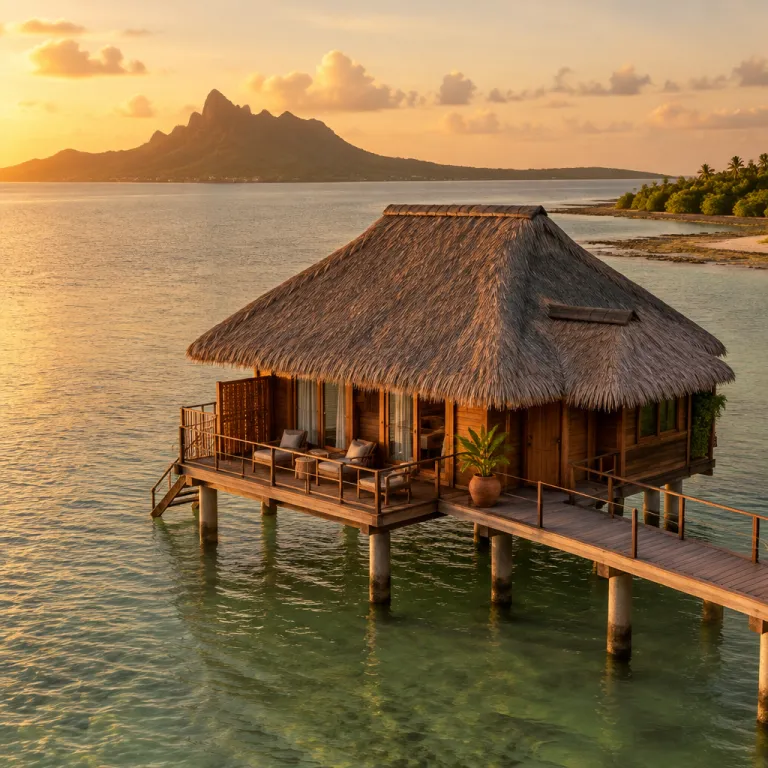
Understanding where French Polynesia is and why it matters for overwater villas
To plan a luxury stay, you first need to understand clearly where French Polynesia sits on the world map. This extraordinary place lies in the South Pacific Ocean in the heart of Oceania, forming a vast maritime territory of France made of 118 islands and atolls. When travellers ask “where is the French Polynesia located for my next overwater villa escape?”, they are really asking how remote, exclusive, and serene their journey will feel.
French Polynesia is an overseas collectivity of France (collectivité d’outre-mer) with the status of pays d’outre-mer, often described as a semi-autonomous territory under French sovereignty that stretches across an ocean area roughly the size of Western Europe when you include its exclusive economic zone. On a map of French territories in the Pacific, you will see these îles scattered between Hawaii and New Zealand, far from crowded countries yet well connected by modern air routes. This combination of distance and accessibility is exactly why people who love refined travel choose these islands for overwater villas rather than more densely developed resorts.
When you look at French Polynesia in relation to other Pacific destinations, you will notice it sits east of the Cook Islands and far northeast of Samoa. These neighbouring countries share a similar lagoon-rich geography, but the Polynésie française stands apart because it belongs to overseas France and uses the same legal and safety standards as mainland France. For many guests booking high-end overwater villas, knowing the exact location of French Polynesia and how it compares to the Cook Islands or Samoa reassures them about healthcare, infrastructure, and overall reliability.
The Society Islands, Tahiti, and Bora Bora: how geography shapes luxury stays
Most travellers first discover this part of the South Pacific when they hear about Tahiti and Bora Bora, the two most famous names in the Society Islands archipelago. The Society Islands are the central cluster of îles within the wider Polynésie, and they host the majority of luxury overwater villas. When you picture a turquoise lagoon circling a lush volcanic island, you are almost certainly imagining this part of French Polynesia.
Tahiti is the main entry island and the economic hub of French Polynesia, while Bora Bora is the iconic honeymoon destination where many of the world’s most exclusive overwater villas stand above a luminous lagoon. Flagship properties such as The St. Regis Bora Bora Resort or the Four Seasons Resort Bora Bora illustrate how the scenery and reef shape villa design. Understanding where this archipelago lies in relation to long-haul routes helps you plan flight times and stopovers, especially if you are connecting from United States hubs or from Europe through France. For travellers comparing French Polynesia with the Maldives, a useful benchmark is that flight times from major countries are often longer but reward you with far fewer crowds.
Within the Society Islands, the geography of each place directly influences the style of overwater villas you can book. Bora Bora’s compact lagoon and ring of motu islets allow for ultra-private villas with direct reef access, while Moorea’s dramatic peaks create panoramic views that rival any Maldives resort on-water escape. When you grasp how the Society Islands are arranged across the ocean, you can choose between more secluded motu stays or livelier main-island experiences.
Papeete, capital of Polynésie française, and the gateway airports
To fully answer the question “where is the French Polynesia for my trip planning?”, you must look at how you actually arrive. The capital Papeete is located on the northwestern coast of Tahiti in the Society Islands, and it serves as the political and cultural heart of the Polynésie française. When people live in Papeete or commute through it, they experience a blend of French and Polynesian influences that shapes the region’s hospitality style.
The main international airport is Faa’a International Airport, just outside Papeete, and it is the primary airport where flights from France, the United States, and other Pacific countries land. Typical non-stop journeys take around 8 hours from Los Angeles, about 5 hours from Auckland, and roughly 22 hours with one stop from Paris. This is the point where most people first feel how far French Polynesia is in terms of climate, language, and rhythm of life, stepping from a long-haul cabin into warm tropical air. From this airport, short domestic flights of 45 to 50 minutes fan out to Bora Bora, around 15 minutes to Moorea, and about 40 minutes to Taha’a via Raiatea, carrying you onward to islands where overwater villas sit above quiet lagoons.
Because the capital Papeete is the logistical hub, many luxury travellers choose to spend at least one night there before or after their overwater villa stay. This pause allows you to experience the oral storytelling traditions of the Polynésie, sample refined French Polynesian cuisine, and understand how people live in this territory of French culture. If you are also considering overwater villa romance in Fiji, comparing flight connections from Papeete to Nadi with those described in guides to exquisite honeymoon places in Fiji can help you design a multi-island Pacific itinerary.
Currency, language, and daily life: practical context for where French Polynesia is
Knowing where French Polynesia lies geographically is only part of planning a luxury stay; you also need to understand how money and language work there. The official currency is the CFP franc, also written as the franc XPF or simply the currency CFP, and it is shared with other French overseas territories in the Pacific. Because French Polynesia is part of overseas France, prices in overwater villas often reflect European standards, yet the setting feels far removed from mainland France.
The official language is French, but Tahitian and other Polynesian languages are widely spoken in daily life, especially in more remote îles. Many staff in high-end overwater villas are multilingual, which makes it easy for guests from the United States and other countries to communicate, while still sensing the authentic oral traditions of the Polynésie. When you hear people live their lives switching gracefully between French and Tahitian, you understand how deeply the culture blends European and Pacific influences.
For travellers comparing French Polynesia with the Cook Islands or Samoa, the combination of the CFP franc and the official language French is a key differentiator. In the Cook Islands, the New Zealand dollar is used, while Samoa has its own tala, so payment systems and price levels feel different from those in this territory of French Polynesia. If you are planning a multi-stop travel route across several islands in Oceania, it helps to map French Polynesia relative to these neighbours and to plan for at least two different currencies.
Polynesia population, remoteness, and the appeal of overwater villas
Another way to understand where French Polynesia is in the travel landscape is to look at the Polynesia population and how sparsely these islands are inhabited. Across 118 îles and atolls, the land area is only about 3 800 square kilometres, which keeps most destinations uncrowded even in peak season. This low density is one of the main reasons why overwater villas here feel more private than in many other countries.
When people live in such remote islands, they develop a close relationship with the lagoon, the reef, and the rhythms of the ocean. Guests staying in overwater villas often sense this connection through guided snorkelling, lagoon tours, and cultural activities that highlight the oral heritage of the Polynésie. Understanding how far French Polynesia is from major population centres helps explain why the night skies are so clear and why the soundscape is dominated by waves rather than traffic.
On a practical level, the relatively small Polynesia population also shapes service levels in luxury properties. Staff often come from nearby islands, and many live French and Polynesian lifestyles side by side, bringing both precision and warmth to guest interactions. If you value seclusion, you will appreciate that the location of French Polynesia on the map naturally limits mass tourism and preserves the calm that overwater villas promise.
Planning your overwater villa stay: routes, comparisons, and booking insights
Once you understand where French Polynesia is, you can start planning the most efficient route to your chosen overwater villa. Most long-haul travellers connect through major international airport hubs such as Paris, Los Angeles, or Auckland before landing at Faa’a near Papeete. From there, short flights or boat transfers carry you across the lagoon to private motu islands where villas stand above crystalline water.
When comparing French Polynesia with other overwater destinations like the Maldives or Fiji, think about time zones, flight durations, and how many countries you might combine in one itinerary. Some guests pair a stay in Bora Bora with time in the Cook Islands or Samoa, using the central position of the Polynésie française in Oceania as a bridge between experiences. Others focus entirely on French Polynesia, moving between the Society Islands and more remote archipelagos to experience different lagoon colours and cultural nuances.
For honeymooners and couples seeking secluded hideaways, it can be helpful to consult curated collections of secluded honeymoon villas over the water that highlight which place best matches your priorities. A simple 6-night plan might include one night in Papeete to recover from the flight, three nights in Bora Bora for iconic views, and two nights on Moorea for adventure and hiking. Whether you choose Tahiti for easier access, Bora Bora for postcard scenery, or another Society Island for deeper immersion, your grasp of where French Polynesia is will guide every decision. In the end, the remoteness of this territory of French Oceania is not a challenge but a luxury, shaping an experience that feels both refined and profoundly peaceful.
Key statistics about French Polynesia and its islands
- French Polynesia comprises 118 islands and atolls, according to the CIA World Factbook, which explains why travellers experience such variety in lagoon colours and landscapes across the territory.
- The total land area of French Polynesia is about 3 827 square kilometres, a relatively small surface spread over a vast oceanic zone, which contributes to the region’s sense of remoteness and exclusivity.
- Papeete, the capital on Tahiti in the Society Islands, sits roughly in the central South Pacific between Hawaii and New Zealand, making it a strategic hub for long-haul connections from both Asia Pacific and the Americas.
FAQ about where French Polynesia is and overwater villa stays
Where exactly is French Polynesia located on the map?
French Polynesia is located in the South Pacific Ocean, in the central part of Oceania, roughly between Hawaii and New Zealand. On a world map, you will find it east of the Cook Islands and northeast of Samoa, spread across a vast maritime area. The main island of Tahiti and the capital Papeete sit in the Society Islands archipelago.
How do I fly to French Polynesia for an overwater villa stay?
Most international travellers fly into Faa’a International Airport near Papeete on Tahiti, which is the primary gateway to French Polynesia. Direct or one-stop routes operate from major hubs such as Paris, Los Angeles, and Auckland, depending on your departure country. From Papeete, you connect by domestic flight or boat to islands like Bora Bora, Moorea, or Taha’a where overwater villas are located.
What currency and language are used in French Polynesia?
The official currency is the CFP franc, also written as the franc XPF, which is shared with other French overseas territories in the Pacific. French is the official language, while Tahitian and other Polynesian languages are widely spoken in daily life. In luxury resorts and overwater villas, staff usually speak French and English, and often additional languages for international guests.
Is French Polynesia part of France or an independent country?
French Polynesia is an overseas collectivity of France, meaning it is a semi-autonomous territory under French sovereignty rather than an independent country. It has its own local government and institutions but remains closely linked to mainland France for defence, currency, and certain administrative matters. This status as overseas France provides legal stability and European-level standards that many travellers appreciate.
Why choose French Polynesia over other overwater villa destinations?
Travellers choose French Polynesia because its islands combine dramatic volcanic scenery, clear lagoons, and a relatively low population, which keeps resorts uncrowded. The blend of French and Polynesian culture creates refined service, excellent cuisine, and strong safety standards, all within a remote and tranquil setting. Compared with other destinations, the location of French Polynesia in the central South Pacific offers a deeper sense of escape and a distinctive cultural experience.