From reef marketing to genetic insurance: what OUTRIGGER's coral gene bank really is
OUTRIGGER’s coral gene bank and reef restoration work over the lagoon is no longer a vague promise of planting a few coral fragments beside an overwater villa ladder. At Castaway Island in Fiji, marine scientists working with OUTRIGGER Resorts & Hotels, non-profit partner Counting Coral and local stakeholders have selected 464 coral fragments specifically for their genetic resilience to warming seas, turning a sculptural installation into a living gene bank that functions as insurance for the surrounding reef. For travelers comparing the best overwater stays in the Maldives and Fiji, this shift from symbolic planting to targeted genetic conservation changes how a luxury resort positions its reef, its properties and its long-term environmental credibility.
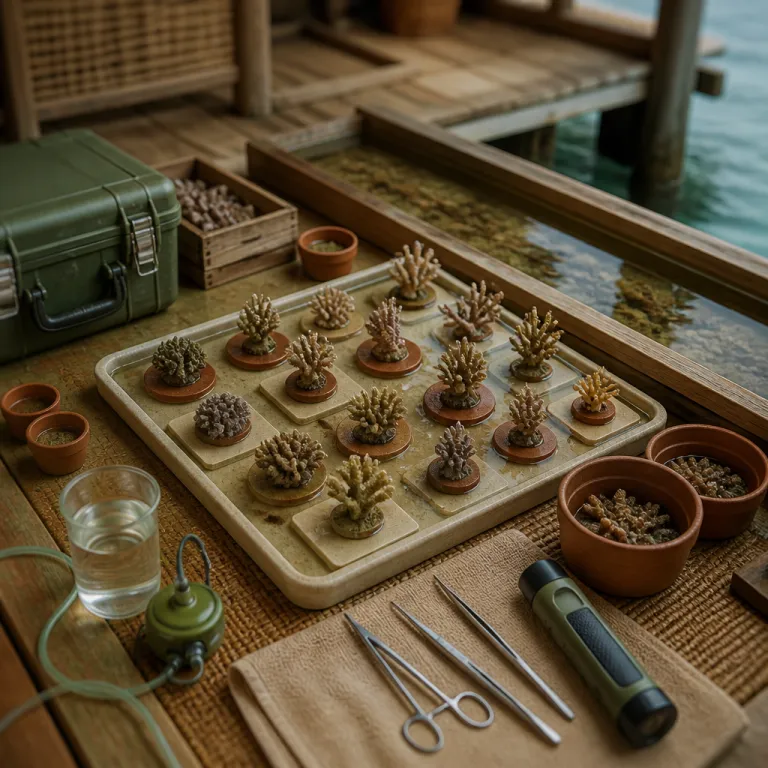
The Sculptural Coral Gene Bank at Castaway Island Resort in Fiji sits just off the Fiji beach, within easy reach of the resort Castaway snorkel zone yet carefully sited to protect fragile coral heads. A coral gene bank is a curated collection of coral genotypes maintained in one place so that, if nearby reefs bleach or break, conservation teams can replant fragments with proven tolerance, preserving both species and genetic diversity. In practical terms, OUTRIGGER Fiji now holds a living library of coral strains that can help repopulate the surrounding reef, and that library is designed as marine-grade art guests can swim around from their overwater or beach resort stays.
According to the project’s own educational materials, “A Sculptural Coral Gene Bank is a marine-grade sculpture designed to support coral growth and genetic diversity.” That definition matters for guests choosing between different island resorts, because it signals that OUTRIGGER’s reef restoration program is built on science rather than marketing copy about planting coral once in June for World Ocean Month. For solo travelers who want their Fiji stays to support real conservation, the presence of resident marine biologists, structured data on coral survival and transparent news updates from the resort Castaway team are now as important as the wine list or the thread count.
World Ocean Month in June has become the annual moment when OUTRIGGER Resorts & Hotels concentrates its sustainability storytelling across its global resorts portfolio. During the most recent World Ocean Month, the group staged more than forty conservation-themed events across Hawai‘i, Fiji, Thailand, Mauritius and the Maldives, using the OUTRIGGER Zone programming as a unifying framework. For guests, that means a stay at an OUTRIGGER Maldives property or at Castaway Island Fiji is likely to coincide with guided reef walks, coral talks and hands-on restoration sessions rather than a single photo opportunity on the beach.
The OUTRIGGER Zone is the brand’s umbrella for on-property conservation and education, and it now spans five countries with resident or consulting marine biologists. At Castaway Island Fiji, the OUTRIGGER Zone includes the Sculptural Coral Gene Bank, traditional coral nurseries, seagrass monitoring and guest-facing briefings that explain why genetic diversity matters more than sheer numbers of coral fragments. Similar OUTRIGGER Zone initiatives at other Fiji properties and at OUTRIGGER Maldives resorts focus on reef-safe snorkeling etiquette, turtle monitoring and mangrove restoration, creating a consistent conservation language across very different island environments.
For travelers who track sustainability news as closely as they track seasonal sale offers or inclusive packages, the scale of OUTRIGGER’s recent activity is notable. In Thailand alone, OUTRIGGER teams and local partners have planted around 3,000 mangrove trees, installed 24,000 seagrass plants and released 10,000 prawns plus 100 fish into coastal habitats, numbers that move beyond symbolic gestures. When you compare that to the 464 coral fragments in the Castaway Island gene bank, it becomes clear that the reef restoration work at this island Fiji resort is one part of a broader seascape strategy rather than a standalone marketing stunt.
How the gene bank changes the overwater villa experience in Fiji and beyond
For guests booking overwater villas through a luxury and premium platform, the coral gene bank and reef restoration work at Castaway Island Fiji subtly reshapes what a lagoon stay feels like. Instead of a generic snorkel off the deck, you are entering a curated reef zone where each coral fragment on the sculpture has been tagged, monitored and selected for its ability to handle warmer water. That level of intention turns a casual swim into an encounter with living conservation infrastructure, especially when a resident marine biologist explains which coral colonies are thriving and why.
Castaway Island, Fiji is part of the Mamanuca Islands, a cluster of low-lying volcanic islands where reef health directly affects beach quality, fish life and storm protection. The resort Castaway team has installed the marine-grade sculptures in a sheltered zone that balances guest access with coral needs, so you can fin from the beach resort shoreline or arrive by kayak from your villa and still feel like you are in a natural reef amphitheater. For solo explorers who value quiet observation, early morning swims here often mean sharing the reef only with parrotfish and the occasional turtle, while the gene bank structure itself becomes a landmark for orienting your snorkel route.
OUTRIGGER Fiji uses the gene bank as a focal point for guest education, with short briefings that explain how coral fragments are transplanted and why genetic diversity underpins long-term reef survival. Staff encourage guests to participate in supervised coral restoration activities, from attaching fragments to the sculpture to logging simple observations that feed into the OUTRIGGER Zone monitoring data. Those who want to go deeper can attend evening talks where marine biologists unpack global coral reef decline, referencing NOAA data that show roughly a 50% loss in live coral cover since the 1980s, and then relate that macro picture back to the specific 464 fragments under your fins.
For travelers who split their time between island Fiji and the Maldives, the contrast in reef management approaches is instructive. Some Maldives resorts still treat coral planting as a one-off photo opportunity, while OUTRIGGER Maldives properties are increasingly aligning with the gene bank model pioneered at Castaway Island, focusing on resilience and long-term monitoring. When you evaluate which resorts offer the best balance of luxury and impact, it is worth asking whether their coral projects have clear objectives, scientific partners like Counting Coral and transparent reporting, or whether they simply post occasional news updates on social media.
The gene bank also influences how you might plan your trip timing and length of stay. Shoulder season bookings, when water temperatures and visitor numbers are slightly lower, can offer calmer conditions for snorkeling around the reef and more one-on-one time with the marine team, and resources such as this guide to why shoulder season is the smartest move for overwater villa bookings can help you align value with visibility. For those tracking Fiji properties for a future sale period, pairing a seasonal promotion or inclusive package with a stay that includes multiple guided reef sessions can turn a standard holiday into a structured learning experience about coral futures.
Digital behavior around these initiatives also tells a story about guest engagement. Resort news posts about the Sculptural Coral Gene Bank routinely prompt a flurry of share actions, from a quick share WhatsApp message to family, to a more considered LinkedIn share that highlights the partnership with Counting Coral and the broader reef restoration narrative. Facebook share and share Facebook buttons on the resort’s sustainability pages, along with print share and email print options in the online newsletter, make it easy for guests to carry the story beyond the island, and that amplification can influence how peers choose their next island or beach resort stay.
For a solo traveler planning a multi-stop itinerary across island Fiji and the Maldives, these details matter as much as room size or pool design. A resort that treats its reef as a living asset, invests in genetic conservation and communicates that work clearly through its news channels is more likely to maintain the underwater quality that justifies an overwater premium. When you see consistent, data-rich updates rather than sporadic marketing posts, it signals that the coral gene bank and reef restoration program is embedded in operations, not just in the public relations calendar.
Can resort scale restoration really help reefs, and how do certifications fit in ?
One of the sharpest questions for any traveler booking an overwater villa is whether resort-scale coral restoration can genuinely help reefs or whether it simply offsets the footprint of the properties themselves. The coral gene bank project at Castaway Island Fiji does not pretend to fix global warming, but it does create a genetically diverse reservoir of coral that can be used to reseed damaged patches of reef around the island and, potentially, other sites in the Mamanuca Islands. That makes it a local resilience tool, especially when combined with broader measures such as wastewater treatment, anchoring rules and guest education on reef-safe behavior.
Operational sustainability choices at OUTRIGGER resorts complement the conservation work happening underwater. The group reports that 94% of its guest amenities are now provided in bulk, with 100% of properties using refill stations instead of single-use plastic bottles, a shift that reduces waste streams without compromising the premium feel of the stay. For a guest, that might mean a sleek refillable glass bottle in your overwater villa and large-format amenities in the bathroom, small details that signal a beach resort is thinking beyond the reef zone and integrating sustainability into daily operations.
Certifications play a role in validating these efforts, especially for travelers who rely on third-party standards to compare resorts across regions. OUTRIGGER has pursued key certification schemes such as Green Key for several of its properties, which assess criteria ranging from energy use to community engagement, and those labels sit alongside the more narrative-driven OUTRIGGER Zone stories about coral and mangroves. When you see a resort that combines a rigorous key certification like Green Key with a transparent coral gene bank and reef restoration program, you can be more confident that sustainability is not confined to a single department.
For context, the Sculptural Coral Gene Bank at Castaway Island Fiji uses marine-grade sculptures as both art and infrastructure, a model that aligns with emerging best practice in coral-safe construction. Travelers who want to understand how overwater resorts can be built and operated with the reef in mind can explore analyses such as this deep dive into coral-safe construction and why the next overwater resorts build for the reef first, then compare those principles with what they observe on site. When an island resort positions its overwater villas away from the most sensitive coral heads, uses non-intrusive piling methods and then invests in restoration like the gene bank, the overall footprint becomes more defensible.
Guest participation remains a cornerstone of the OUTRIGGER Zone philosophy, and it is central to the gene bank’s impact. Visitors are invited to join coral planting sessions, attend briefings on why coral reefs are important because “They support marine biodiversity and protect coastlines.” and then carry those lessons home, where their future travel choices and social media share habits can reinforce demand for serious conservation. For a solo explorer who values authenticity, spending an afternoon helping attach coral fragments to a sculpture in the lagoon can feel more meaningful than another spa treatment, especially when you understand that those fragments have been selected for their ability to survive the next marine heatwave.
Looking ahead, the integration of art, science and tourism at Castaway Island Fiji hints at how other island resorts in the Maldives and beyond might rethink their relationship with the reef. As coral gene banks expand globally and more resorts adopt similar models, travelers will have clearer benchmarks for what serious restoration looks like, from the number of fragments and species involved to the presence of scientific partners and long-term monitoring plans. For now, the Castaway Island project stands out as a case study in how a resort can turn its lagoon into both a luxury amenity and a laboratory for reef resilience, and that dual role is likely to shape how discerning guests choose where to stay, where to share their experiences and which news stories they amplify.
Further reading
For independent verification and deeper context, readers can consult the OUTRIGGER Resorts & Hotels newsroom, Travel and Tour World and Travel Daily News Asia, which have all reported on the Sculptural Coral Gene Bank at Castaway Island Fiji and related initiatives.