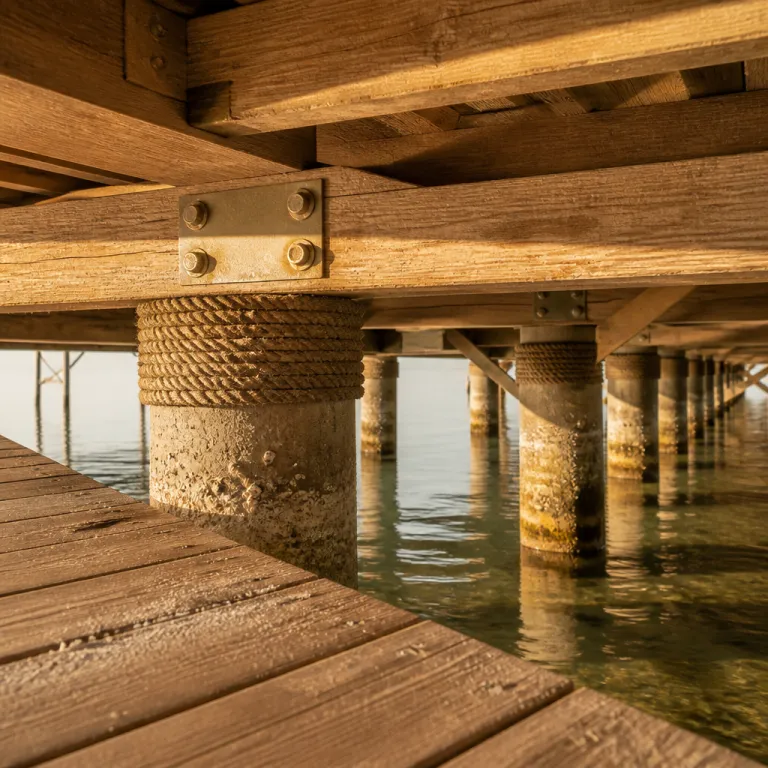
Why the piling foundation beneath your overwater villa matters
The calm you feel on an overwater villa deck starts with what you cannot see. Modern overwater villa engineering relies on a grid of piles driven deep into the seabed, creating structural stability that separates a rock solid stay from a shuddering one. When you book overwater villas in a remote island resort, you are also choosing a philosophy of construction, environmental impact and long term maintenance beneath the water line.
Engineers usually target water depths between 2 and 5 metres, a sweet spot that balances guest experience and safe construction. In this band, overwater structures sit high enough for boat clearance yet close enough to the lagoon floor for divers to inspect piles and reinforced concrete bases regularly. Structural engineers, marine biologists and construction teams now collaborate from the earliest planning phase, treating the foundation system as both a resort asset and a responsibility to the marine environment.
Most serious overwater resort projects use marine grade steel or filled concrete piles around 20 to 30 centimetres across, driven more than 10 metres into compacted seabed layers. These indicative figures, consistent with coastal engineering practice and guidance from organisations such as PIANC (e.g. Guidelines for the Design of Fenders Systems, 2002, and regional pile design notes used in the Maldives tourism sector), show how much hidden structure supports each villa. These piles carry the weight of every villa, every glass floor panel and every guest walking across the deck, so their spacing and alignment define how much vibration you feel when a neighbor closes a door. When a resort overwater master plan is done well, the piles form a quiet structural rhythm under the lagoon, and you sense it only as an absence of sway and creak.
From bora style dreams to real world overwater construction
Many travelers arrive with a mental postcard of Bora Bora or French Polynesia, imagining a single overwater bungalow floating in a turquoise lagoon. The reality is a carefully engineered chain of overwater bungalows and villas, linked by decks and boardwalk systems that must flex with waves yet feel reassuring under bare feet. Behind every romantic villa design sits a spreadsheet of loads, wind forces and marine grade construction materials that keep the fantasy standing.
On a well executed island resort, the boardwalk to your overwater bungalow is your first structural guide. Each step should feel even, with floor panels that do not drum or bounce, and joints where stainless steel fixings sit flush rather than proud. If you sense rhythmic vibration as luggage carts pass, it often signals undersized beams or poorly braced overwater structures, and that same compromise may extend beneath your villa deck into the piling system that anchors the building.
Some of the most thoughtful projects now combine modular bungalow construction with strict marine environment protocols. Prefabricated segments for decks, villa walls and glass floor frames arrive by barge, reducing noisy work over water and limiting impact on coral and seagrass. For a sense of how far serious developers will go to protect reefs, consider private island case studies such as a coral caye overwater escape in Belize or branded residence projects in the Maldives, where construction planning, conservation and long term lagoon stewardship are treated as a single design brief.
How cross bracing and depth turn a swaying deck into a stable refuge
Stand in the center of an overwater villa during a squall and you will feel the engineering choices in your bones. Cross bracing systems, usually arranged as a lattice between piles, are what stop the whole structure from racking sideways when wind and waves hit from different angles. Without this hidden structural web, even a heavy reinforced concrete foundation can translate water movement into an unnerving flex under your feet.
At the optimal 2 to 5 metre depth, engineers can install diagonal braces between piles without interfering with boat traffic or the natural flow of the lagoon. These braces, often made from marine grade stainless steel or concrete encased steel, tie the piles into a single structural frame so loads from the villa deck, roof and glass floor openings are shared rather than concentrated. When you feel only a gentle, slow response to swell rather than a sharp shudder, you are experiencing the benefit of that cross braced system.
Responsible developers pair this structural work with reef safe construction protocols that respect the marine environment. Silt curtains limit sediment spread during pile driving, quieter tools reduce acoustic stress on fish, and heavy work is scheduled outside sensitive breeding seasons to reduce environmental impact. Some projects go further, funding coral nurseries and gene bank style initiatives such as engineered coral fragment programs in the Pacific, turning the resort’s overwater footprint into a platform for active restoration.
Decks, materials and the quiet signals of good engineering
Once you know where to look, the deck of an overwater villa becomes a readable map of its engineering. Composite decking, made from recycled plastics and wood fibers, offers strong grip and low maintenance, while tropical hardwood decks deliver a warmer feel but demand careful sourcing and regular work to resist water and sun. In both cases, the way boards meet, the spacing of floor panels and the alignment of stainless steel screws tell you as much about construction quality as any design brochure.
Under that surface, beams and joists transfer loads into the piling foundation, and this is where overwater foundation design decisions echo through your stay. A deck that feels drum tight underfoot usually sits on closely spaced beams, while a hollow ring or springy sensation can hint at longer spans or lighter construction materials. When you step onto the glass floor and feel no extra flex around the opening, it signals that the structural frame was properly reinforced rather than simply cut to fit a view of the water.
Environmental impact also shows up in material choices that are not immediately visible. Marine grade fasteners and brackets resist corrosion, reducing the need for frequent replacement trips across the lagoon and limiting debris in the marine environment over the long term. Where you see clean joints, minimal rust staining and decks that sit level above the water line, you are usually looking at a resort that invested in both structural integrity and thoughtful planning from the outset.
Typical overwater villa materials and care
| Component | Common materials | Typical inspection interval* |
|---|---|---|
| Piles and cross bracing | Reinforced concrete, steel with protective coatings | Annual diver survey; detailed structural review every 5 years |
| Deck structure | Treated timber or steel beams, composite joists | Visual checks every 6–12 months |
| Decking surface | Composite boards or certified hardwood | Cleaning several times a year; resurfacing as needed |
*Intervals based on guidance from coastal resort operators, marine engineering consultancies and practical experience on Indian Ocean and Pacific island projects.
Reading the reef: what the seabed says about your overwater stay
The most honest review of an overwater resort often comes from the reef beneath it. Healthy coral heads close to piles, fish schooling around shaded structures and clear water between stilts all suggest that construction respected the marine environment. Cloudy water, broken coral rubble and bare sand scoured around each foundation point to a project where speed or cost trumped environmental impact.
Serious developers now treat Environmental Impact Assessments as more than paperwork, using marine biologists as core members of the design équipe. They map currents, seagrass beds and coral bommies before any pile driving, then adjust villa layout, deck alignment and even the number of overwater bungalows to reduce impact on sensitive zones. Annual diver surveys check for scour erosion at pile bases, and where sand has been stripped away, engineers add rock armour or concrete collars to protect both the structures and the seabed.
For travelers, a few simple checks reveal whether an overwater villa foundation system has been paired with genuine stewardship. Ask how often the resort inspects its overwater structures, whether it funds local conservation or coral restoration, and how it manages waste and grey water under the decks. To see how some properties now blend ownership models, engineering ambition and conservation, look for independent analyses of Maldives branded residence overwater projects, where long term thinking about piles, bracing and reef health becomes a selling point rather than a footnote.
Technology innovations shaping the next generation of overwater villas
Behind the scenes, overwater villa foundation design is entering a more data rich era. Structural engineers, marine biologists and construction teams now share digital models that simulate wave loads, storm surges and sea level rise on overwater structures before a single pile is driven. This shift from rule of thumb to scenario testing is quietly changing how island resorts balance guest comfort, safety and environmental impact.
New sensors embedded in piles and decks track movement, corrosion and water levels in real time, feeding maintenance teams with early warnings long before guests feel a wobble. Prefabricated modular systems for bungalow construction reduce noisy work over water, while advanced marine grade coatings extend the life of steel and reinforced concrete in harsh lagoon conditions. Some projects even experiment with hybrid piles that combine concrete cores and stainless steel jackets, aiming for both strength and reduced leaching into the marine environment.
For travelers, the most practical innovation is transparency. More resorts now publish plain language guides to their construction materials, foundation systems and reef protection measures, answering questions such as “What materials are used in overwater villa construction?” with “Steel, concrete, and sustainable wood.” and “How do overwater villas impact marine life?” with “Proper design minimizes disruption.” and “Are overwater villas safe during storms?” with “Engineered to withstand severe weather.” When you see this level of detail, you are usually looking at a property that treats overwater villas as long term commitments to both guests and the lagoon, not just photogenic structures on piles.
FAQ
How deep is the water beneath most overwater villas ?
Most serious overwater villa projects target water depths between 2 and 5 metres beneath the deck. This range keeps the villa high enough for boat access yet shallow enough for divers to inspect piles and foundations safely. It also reduces wave energy at the seabed, limiting scour around the structural base.
What should I look for to judge deck stability as a guest ?
When you walk along the boardwalk or villa deck, pay attention to vibration and sound. A well engineered structure feels firm underfoot, with minimal bounce and no rattling of floor panels or glass floor frames when someone else moves. Visible stainless steel fixings should sit flush, and the deck line should appear straight above the water without noticeable sagging.
Do overwater villas always damage the reef below ?
Overwater villas can be built with limited impact when planning and construction follow strict reef safe protocols. Careful pile placement away from live coral, use of silt curtains and scheduling noisy work outside key breeding seasons all reduce stress on the marine environment. Long term monitoring and restoration projects can even improve local reef health compared with neglected coastal areas.
Why do some overwater villas feel more solid than others ?
The difference usually comes down to piling depth, cross bracing and material quality. Villas with deep, well braced piles and robust beams transfer loads efficiently, so you feel only gentle movement during waves or wind. Lighter construction, wider spans and minimal bracing tend to produce more flex, creaks and vibration.
Are overwater villas safe during storms and high winds ?
Properly engineered overwater structures are designed to withstand severe weather, including strong winds and storm driven waves. Piles are driven deep into the seabed, and the structural frame is braced to resist both vertical and lateral forces. Guests should still follow resort guidance during extreme events, but the underlying engineering is built with these conditions in mind.