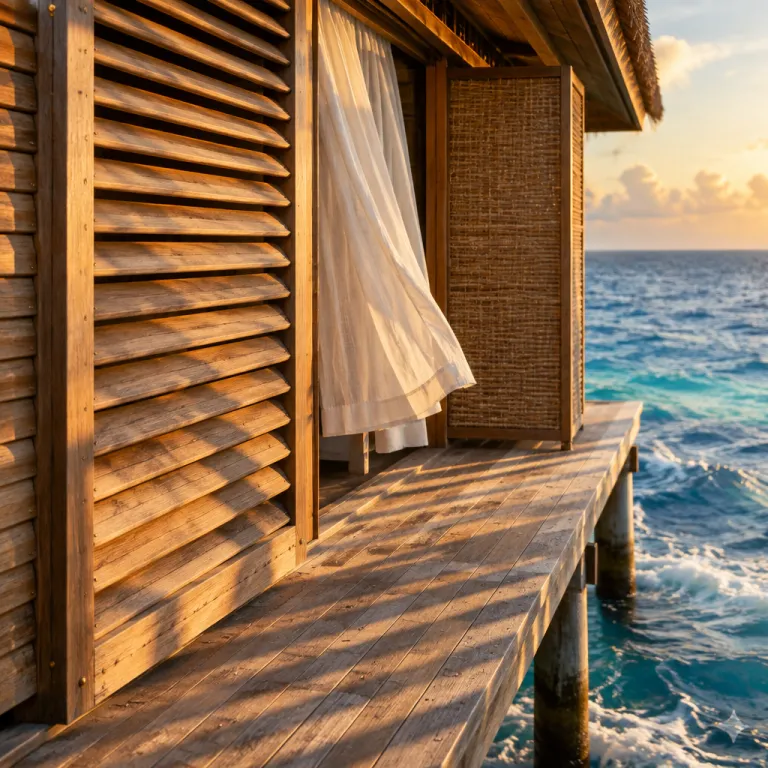
Reading overwater villa design through the midday sun
Overwater villa design looks effortless in photos, yet the real test comes when the sun sits high and the lagoon turns into a mirror. At noon the best overwater villas balance shade, airflow and water access so you actually linger on the deck instead of retreating to the air conditioning. When you plan your next overwater villa stay, think less about sunset angles and more about how the villa behaves between lunch and late afternoon.
Orientation is the quiet hero here, especially in the Maldives or Bora Bora where the ocean light can be brutal. A villa facing due west may give you a cinematic sunset over crystal clear water, but that same view can mean two hours of harsh glare bouncing off the lagoon straight into your glass floor and sliding doors. Ask the resort which overwater bungalows face prevailing breezes and which face the low sun, because the difference between a usable deck and a blinding one is often just a few degrees of rotation.
In many Maldivian resorts, the first half of an overwater jetty faces sunrise and the second half faces sunset, so not all bungalows offer the same thermal comfort. Couples planning a luxury escape often focus on whether the villa has a private pool or direct access to the water, yet they rarely ask how hot the deck gets at 14.00. When you email the resort or your travel advisor, be specific and request overwater villas on the shadier side of the jetty, especially if you are a fair skinned guest or traveling with adults children who will spend hours outside.
Look closely at aerial photos of any private island resort and you will see how the overwater bungalows curve with the reef line. That curve is not only about framing the lagoon and marine life, it also controls how much clear waters reflection hits your terrace during the day. In destinations like the Maldives or Bora Bora, where the sun path is predictable, smart overwater villa design uses the jetty layout to stage shade like a moving asset rather than an afterthought.
Passive cooling: how architecture keeps decks usable at noon
Once orientation is set, passive cooling decides whether your overwater bungalow feels like a breezy pavilion or a greenhouse on stilts. Deep roof overhangs, generous eaves and high ceilings allow hot air to rise while keeping the deck in shade, which matters more than the size of your private pool when the lagoon is blazing. When you compare villas, pay attention to how far the roof projects over the terrace and whether there are side fins or pergolas to block low angle sun.
Cross ventilation is another quiet luxury that rarely appears in glossy marketing for overwater bungalows. A villa with windows or louvered panels on both the lagoon and jetty sides can pull air across the room, cooling the king bed and queen beds area without relying solely on air conditioning. In contrast, a single aspect bungalow with only ocean facing glazing may trap heat, especially if the glass floor and large sliding doors sit in full sun for most of the day.
Materials matter as much as layout in serious overwater villa design, particularly in humid destinations like the Maldives. Thatch, timber screens and fabric shade sails absorb and diffuse heat differently from metal roofs and bare glass balustrades, which can radiate warmth back onto the deck. When a resort invests in layered shading rather than just a single umbrella by the pool, it signals that someone has actually tested the space at midday instead of designing only for the Instagram shot.
Look at how some design led properties in Southeast Asia handle tropical light and then apply that lens to your overwater planning. At a design focused retreat in Phuket, for example, vernacular materials and industrial details are combined to manage glare and airflow across courtyards and pools, a useful reference when you evaluate any luxury resort that sits directly over water; you can explore this approach in depth through this design led tropical resort case study. The same principles that keep a land based villa comfortable at noon will usually translate to a bungalow on stilts above a lagoon, only with the added reflection from the ocean surface.
For couples who travel frequently to private island resorts, these passive strategies quickly become non negotiable. You start to notice which overwater villas have ceiling fans positioned over the king bed and dining table, and which rely entirely on air conditioning that shuts off when you open the doors. A genuinely luxury focused resort will talk openly about airflow, shading and thermal comfort, not just about snorkeling diving access and the size of the private pool.
Glass floors, glass walls and the greenhouse trap
Glass is the seduction tool of overwater villa design, yet it is also the fastest way to overheat a room if handled without nuance. Everyone loves the idea of a glass floor panel framing marine life in crystal clear water, but few guests consider how much solar gain that same panel can introduce at noon. The smartest overwater villas treat glass as a controlled aperture, not a full facade that turns the bungalow into a sun trap.
Start with the glass floor itself, which is often placed under a coffee table or near the king bed for drama. If that glass floor sits in direct sun for hours, it can radiate heat upward into the villa, warming the air around both the sleeping area and any adjacent dining nook. Look for designs where the glass floor panels are partially shaded by the roof overhang or by structural beams, so you still see the marine life without turning the space into a greenhouse.
Glass walls facing the lagoon are even more critical in hot destinations like the Maldives or Bora Bora. A full height glazed facade gives you cinematic views of the ocean and the resort’s overwater bungalows, yet without deep eaves or external louvers the interior temperature can spike dramatically by early afternoon. When you review photos, check whether the sliding doors are recessed under the roof line and whether there are side walls or screens to shade the edges where heat often builds.
Some of the most thoughtful overwater villa design now uses a mix of solid walls, operable shutters and targeted glazing to balance view and comfort. You might see a villa where the main view from the king bed is framed by a single large opening, while secondary windows are smaller and shaded to encourage cross ventilation. For a deeper dive into how regional architecture informs these choices, look at this analysis of Balinese thatching and Maldivian minimalism in overwater villa architecture, then apply those lessons when you compare different resorts.
When you plan a trip that includes both adults and children, glass safety and comfort become even more important. A family friendly resort should be able to confirm whether glass floor panels have non slip finishes and whether any low glass balustrades on the deck are shaded to avoid scorching small hands. Ask directly how hot the glass gets at midday and whether blinds or curtains can fully block the sun if you want to nap in the queen beds area after a morning of snorkeling diving.
Pools, ladders and the real meaning of water access
In marketing language, a private pool on an overwater villa deck sounds like the ultimate luxury. In practice, the way that pool is oriented and shaded will decide whether you actually use it when the sun is high and the lagoon is glaring. A plunge pool in full sun can feel like a warm bath by early afternoon, while a smaller pool tucked under partial shade may stay refreshingly cool all day.
When you study photos, look at where the pool sits relative to the roof and any pergola elements. A pool pushed right to the edge of the deck with no overhead shade will reflect intense light back into the villa, especially if the water surface aligns with the glass doors. By contrast, a pool partially recessed under the roof overhang or framed by timber screens can act as a cooling buffer, tempering the heat before it reaches the king bed and indoor dining area.
Direct access to the water is another phrase that hides a lot of design decisions. The ladder that drops from your deck into the lagoon is not just a convenience for snorkeling diving, it is also a thermal comfort tool because it lets you cool down quickly when the deck heats up. Overwater bungalows that position the ladder on the shadier side of the villa, away from the harshest reflection, make it easier to slip into clear waters without scorching your feet on sun baked steps.
Some of the most satisfying overwater villas in the Maldives and Bora Bora pair a modest private pool with excellent lagoon access and carefully considered shade. You might have a king bed facing the ocean, a small plunge pool under a pergola and a ladder that drops straight into a coral rich section of marine life, all oriented to catch breeze rather than glare. That combination often feels more luxurious than a huge pool in full sun, especially for adults who value long, comfortable afternoons outside over a single dramatic photograph.
For couples planning a special trip, ask the resort to describe not only the size of the pool but also its depth, orientation and shading. A family friendly property should also be able to explain how the pool and ladder are secured for adults children, and whether there are shaded shallow areas where younger swimmers can play. The more specific the answers, the more likely the resort has actually tested the overwater villa design in real midday conditions rather than just during golden hour.
How to read floor plans and photos for real shade
Most guests skim floor plans to check the size of the villa and whether there is a private pool, yet those same drawings can reveal exactly how the space will feel at noon. Start by finding the north arrow on the plan, then imagine the sun path across the lagoon and how it will hit the deck, roof and glass floor panels throughout the day. If the resort does not publish a plan, ask for one, because serious overwater villa design is proud to show its layout.
Look at the relationship between the king bed, the queen beds if present and the main glazing line facing the ocean. If the sleeping area sits very close to a fully glazed wall with no deep overhang, expect strong light and potential heat build up in the early afternoon. A better layout pulls the bed slightly back under the roof, with a shaded transition zone between the interior and the deck that can be used for relaxed dining or lounging even when the sun is high.
Photos tell a parallel story when you know what to watch for. If every image of the overwater bungalows is shot at sunrise or sunset, ask yourself what the deck looks like at 13.00 when the lagoon is at its brightest. Seek out guest photos that show the villa at different times of day, paying attention to where shadows fall on the pool, the ladder and any glass floor features.
One useful trick is to look for ceiling fans and operable windows in both the bedroom and living areas of the overwater villas. A villa that relies only on air conditioning may feel sealed and stuffy when you want to open the doors to hear the ocean, especially in humid destinations like the Maldives. Cross ventilation, shaded verandas and thoughtful placement of furniture can make a smaller bungalow feel more comfortable than a larger but poorly oriented villa, particularly for adults who enjoy spending long stretches outside.
When you plan a trip that includes both adults and children, floor plans also help you understand how family friendly the overwater villa really is. Check whether the queen beds or secondary sleeping areas sit closer to the deck doors and whether there are lockable latches to control direct access to the water. A resort that takes time to walk you through these details by email or phone usually has a stronger design culture than one that only sends generic marketing images.
Instagram moments versus 14.00 reality
Luxury overwater resorts have become highly skilled at staging the perfect photograph, from floating breakfasts in the private pool to hammocks suspended above the lagoon. Yet the villas that feel genuinely indulgent are the ones that still work when the sun is overhead, the wind drops and the ocean turns into a sheet of light. As a traveler, your task is to read between the lines of the marketing and ask how the overwater villa design performs in those less photogenic hours.
Some high profile brands in the Maldives, such as Waldorf Astoria and Ritz Carlton, now commission detailed environmental studies before building new overwater villas. They model wind patterns, sun paths and lagoon reflection to decide where to place bungalows, how deep to make roof overhangs and where to position ladders for direct access to the water. When you see that level of planning mentioned in resort materials, it is usually a sign that the midday experience has been considered as carefully as the sunset view.
On the booking side, platforms that specialise in overwater stays increasingly highlight orientation, shade and airflow alongside more traditional filters like private pool or king bed. At overwatervillasstay.com, for example, the editorial lens focuses on whether the glass floor, the ladder into the reef and the horizon line genuinely deliver throughout the day, not just in one flattering frame. That perspective helps couples planning a romantic trip separate overwater villas that are architectural marvels from those that are simply rooms on stilts with a surcharge.
When you compare options across the Maldives, Bora Bora and other island destinations, notice how often the word private appears without context. A private island setting or a secluded bungalow at the end of the jetty sounds appealing, but if that seclusion also means full exposure to afternoon sun with no breeze, the reality may feel less luxurious than the brochure. The most satisfying overwater bungalows offer both privacy and comfort, with shaded decks, thoughtful airflow and easy access to snorkeling diving in clear waters that stay inviting all day.
For couples who travel with adults children or extended family, the midday reality matters even more. A family friendly overwater resort should provide shaded play areas on the deck, safe railings around the pool and clear explanations of how the villa design manages heat for guests of all ages. When a property can answer those questions confidently, you are far more likely to step onto your deck at noon, feel the breeze and think that the architecture has your back.
Design lessons from beyond the lagoon
Some of the sharpest insights into overwater villa design come from properties that are not actually over water but share the same climate challenges. Clifftop retreats in Santorini, for example, wrestle with intense sun, reflection from the caldera and the need to keep plunge pools usable throughout the day. When you study how these villas handle shade and airflow, you gain a toolkit for judging any overwater bungalow in the Maldives or Bora Bora.
One standout example is a caldera facing retreat in Imerovigli, where suites use deep recesses, layered pergolas and careful orientation to tame the Aegean glare. The property shows how a small pool can feel luxurious when it is partially shaded and aligned with prevailing breezes rather than simply pushed toward the edge for a dramatic drop off; you can see this approach unpacked in this intimate caldera retreat design review. Apply the same questions to any overwater villa you consider, asking where the shade falls at noon and how the air moves through the space.
Across the Indian Ocean and Pacific, architects now cross pollinate ideas between land based villas and overwater bungalows. Techniques like double roof systems, ventilated ridges and adjustable timber screens migrate from hillside resorts to lagoon facing decks, improving thermal comfort without sacrificing the ocean view. When you see these elements in photos or floor plans, you are looking at a villa that has been designed to survive the midday sun rather than merely pose for it.
For couples planning a once in a lifetime trip, these design details may seem technical at first glance. Yet they translate directly into how long you can read on the deck, how cool the king bed feels at siesta time and whether the private pool invites a second swim after lunch. Paying attention to shade, airflow and orientation turns you from a passive guest into an informed traveler, one who chooses overwater villas that respect both the lagoon and the people staying above it.
Key figures on overwater villas, climate and comfort
- In tropical maritime climates, solar radiation can account for more than 60 percent of cooling loads in poorly shaded villas, according to research by the American Society of Heating, Refrigerating and Air Conditioning Engineers, which underscores why deep overhangs and shading devices are critical in overwater villa design.
- Studies from the Maldives Ministry of Tourism indicate that over 70 percent of new resort developments now include environmental impact assessments that model sun paths and wind patterns, a shift that directly influences how overwater bungalows are oriented along jetties.
- Field measurements in Pacific island resorts published by the International Journal of Sustainable Built Environment show that shaded outdoor decks can be up to 6 °C cooler than adjacent unshaded areas during peak sun hours, dramatically extending the usable time guests spend outside.
- Guest satisfaction surveys from several major luxury resort groups report that villas with private pools and effective shading receive up to 20 percent higher comfort ratings during midday periods compared with similar sized villas that lack adequate overhangs or cross ventilation.
- Data from family focused island resorts indicate that overwater villas classified as family friendly, with secure railings and controlled direct access to the water, see higher repeat booking rates among guests traveling with adults children, suggesting that safety and comfort at midday strongly influence loyalty.
FAQ about shade, airflow and overwater villa design
How can I tell if an overwater villa will be too hot at midday ?
Check the villa’s orientation, roof overhangs and shading elements in both floor plans and photos. If the main glazing faces west with little overhead shade and most images are taken at sunset, expect strong afternoon heat and glare. Ask the resort directly which side of the jetty gets more shade during the hottest hours and request a villa on that side.
Are glass floors in overwater villas comfortable during the day ?
Glass floors can be comfortable if they are partially shaded and not oversized. When a glass floor panel sits in full sun for hours, it can radiate heat into the room and make nearby areas noticeably warmer. Look for designs where the glass floor is tucked under beams or roof projections and ask the resort whether blinds or covers are available if needed.
Does a bigger private pool always mean a better overwater villa ?
A larger private pool is not automatically better if it sits in full sun and overheats by early afternoon. A smaller plunge pool that is partially shaded and aligned with breezes can feel cooler and more usable throughout the day. Focus on orientation, shading and depth rather than just the pool’s length and width on the floor plan.
What should families look for in a family friendly overwater villa ?
Families should prioritise secure railings, lockable doors controlling direct access to the water and shaded outdoor areas where children can play. Check whether secondary sleeping areas with queen beds sit away from unshaded glass and whether the deck has non slip surfaces around the pool and ladder. A family friendly resort will be able to explain these design features clearly before you book.
Is it worth asking the resort detailed design questions before booking ?
Yes, asking specific questions about shade, airflow, glass floors and pool orientation often reveals how seriously a resort takes overwater villa design. Properties that respond with precise information about sun exposure, breeze patterns and safety features usually deliver a more comfortable midday experience. If answers stay vague or purely marketing focused, consider choosing a resort that engages more deeply with these practical details.